special interview
Special Interview - Tamaki Ishigaki (Part 1)
Commemorating the 45th anniversary of the Wizardry series, this dedicated site will feature special collaborative projects with prominent figures who have been involved with Wizardry. In this installment, manga artist Tamaki Ishigaki—who penned the 1990s comic adaptation—joins us for an interview. We spoke with him about how he first became involved with Wizardry and the behind-the-scenes story of its production.
──To start, could you give a brief introduction of yourself for our readers?
Hello, I'm Tamaki Ishigaki. Technically, I'm a manga artist, and since I haven't officially retired, I've just been on a continuous—endless—hiatus. Well, back in the day, I drew the Wizardry manga.
──Thank you. For a long time, you were an artist whose name would pop up in "Where Are They Now?" discussions, but recently you've started doing interviews for fan communities and holding solo exhibitions. How did that come about?
Someone I met on mixi told me there was a Wizardry fan club on former Twitter and asked if I'd like to drop by their gathering. That was the trigger. Holding the solo exhibition was also largely thanks to those people running around and setting everything up for me.
──In that process, you've likely had more opportunities to see and hear about recent developments in Wizardry, including works released by Drecom. What were your thoughts on them?
Long-running IP needs to be taken care of. I didn't hear this directly, but I once heard that a shonen manga editor said if you can keep a series going, you should keep it going as long as humanly possible. Wizardry has continued in that manner, which shows just how many fans it has. Also, its world isn't rigidly fixed; it's pretty broad, leaving plenty of room for imagination.
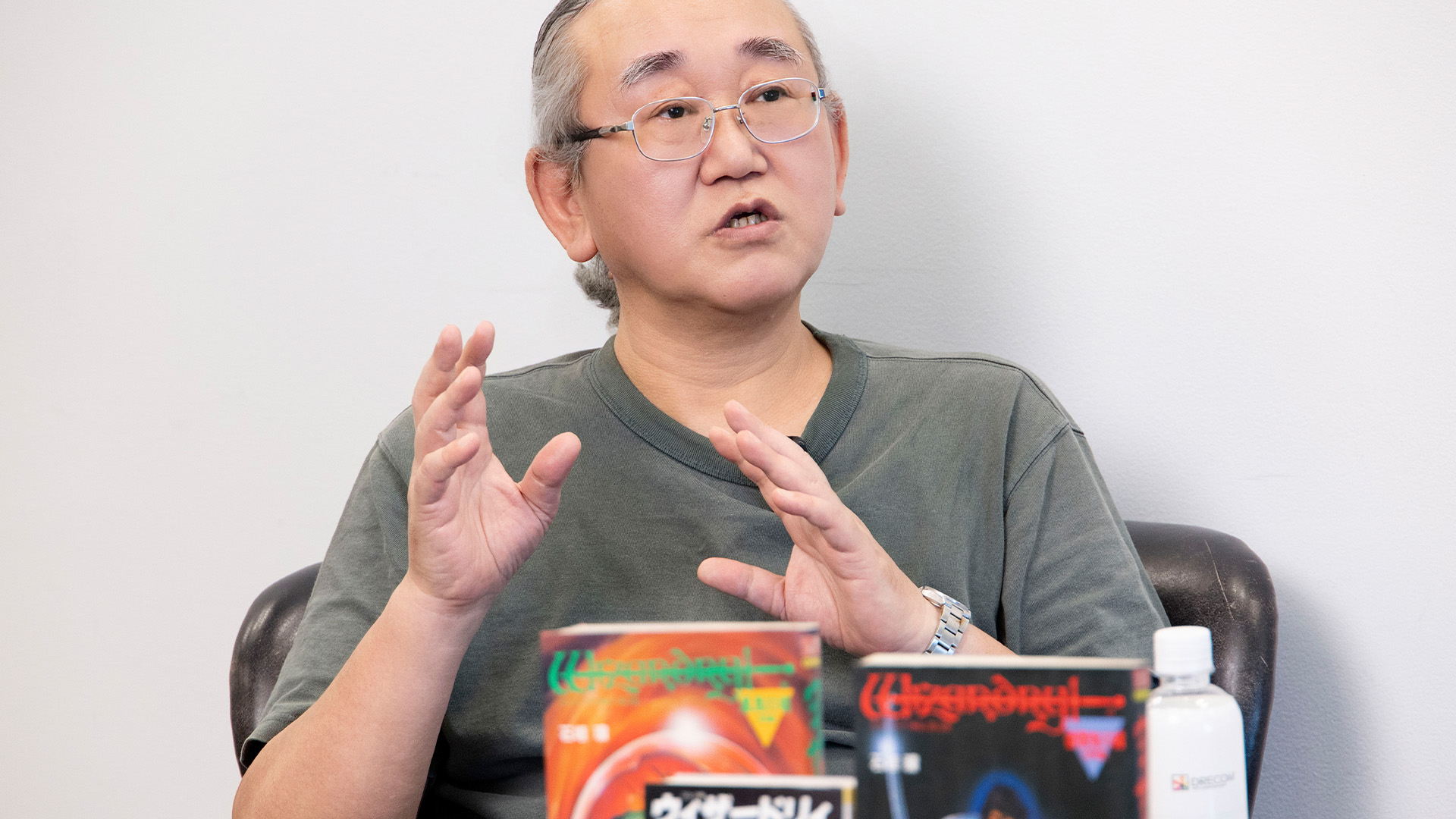
──Now, let's transition from recent events back to the past. After making your debut as a manga artist in 1984 in Weekly Shonen Sunday Extra, could you tell us how you came to work on projects related to Famicom Hisshoubon by JICC Publishing (Editor's Note: Renamed Takarajimasha, Inc. in 1993)?
I had been working as an assistant for shojo manga artists, but the production studio ended up closing down in 1986. So, I practically begged my wife (Editor's Note: Shojo manga artist Noa Misaki) to support me for a year, since she was earning more than I was. My plan for that year was to spend all my free time writing plots, drafting thumbnails, doing final art, and either pitching or submitting works. But the very next day, I saw a help-wanted poster at the video rental shop I frequented, applied on the spot, and worked there for about three months. Then, the same owner needed help at his mahjong parlor because they were short-staffed, so I went to work there instead.
──During that time, were you still intent on doing artwork for a living?
Yes. But back then, there weren't as many magazines or publishers as there are today, so I was agonizing over where to go. An editor from Weekly Shonen Magazine who saw my dojinshi actually reached out to me. Since it was back in the day, I had written my address and phone number on the colophon, so he called me directly.
──So you were active in the dojin scene.
Yeah, during my second or third year of university. When you work as a shojo manga assistant, pretty much everyone does dojinshi. I even went to Comiket two or three times back in the "Gamera" days (Editor's Note: Refers to the "Gamera Hall," a nickname for the International Pavilion at the Tokyo International Trade Fair Grounds in Harumi). Around that time, a writer for Famicom Hisshoubon whom I met through dojin activities called me up. They were drastically short on writers/illustrators for spot illustrations (cuts), and the editor-in-chief asked him, "Since you do dojinshi, do you know anyone who can draw?" So I brought in my work that had appeared in Sunday along with my dojinshi, and after seeing it, they said, "If you can draw at this level, you're hired."
──So you suddenly started working for a gaming magazine. Had you been playing video games before that?
I owned a Famicom and casually played games like Mario, Zelda, Final Fantasy, and so on. But the work itself was rough.
──What was it like?
Since Hisshoubon was a biweekly magazine, deadlines were tight, but beyond that, everything was in full color. That was brutally tough. Color work takes a ton of effort, but the page rate was low—it was barely any different from black-and-white. Still, it was decent money overall. I think I did that for about six months.
A Sudden Wizardry Manga Adaptation
──Chronologically speaking, did the Wizardry comic adaptation project start right after that?
That's right. I needed to start drawing my own work soon, so I had originally planned to quit the mahjong parlor job in May. My wife was also pregnant at the time, so while I was thinking about where to submit my drafts, I kept fulfilling incoming requests for spot illustrations. Then, around March, I think, Mr. Inoue, the editor-in-chief, asked if I could drop by the editorial office. When I went, he told me, "We're going to publish a three-volume original Wizardry release. Since you can draw spot illustrations, can you draw manga?" By the way, I had mentioned to him before that I drew manga, but he had completely forgotten. He reacted like, "Why didn't you tell me sooner? Finding manga artists is really hard!" (laughs)
──Pitching a three-volume original project right off the bat sounds like a pretty bold move, even for that era.
Well, I needed the money. But there was no time. They told me the deadline for Volume 1 was the end of July, and I was like, "No way, that's impossible!" (laughs). Anyway, since B4 paper size wouldn't make the deadline, I asked them to let me use A4 instead. I also scrambled to play the game. As for Wizardry, I knew about it because a colleague at the mahjong parlor said it was fun, but I hadn't played it myself. So once the job was confirmed, I played it non-stop, day after day. I bought up every Wizardry guide book published by ASCII and others at the time, and submitted the plot in May. Even though I could move on to rough pencil sketches after that, there was no way someone who had only ever drawn up to 32 pages could suddenly draw 180 pages. Seriously! (laughs)
Consulting Benny Matsuyama
──Throughout the entire manga series, writer Benny Matsuyama was credited as a "Collaborator" (Editor's Note: Writer/Author who was heavily involved in producing Wizardry-related content for Famicom Hisshoubon and wrote novels such as Wizardry: Neighboring Gray and Youth and Wizardry II: Wind, Does It Reach the Dragon?). Specifically, what kind of help did he provide?
Benny-san and I aligned on spell names to unify them under two-kanji character names. Also—and this pertains to the Gaiden (Spin-off) series—I consulted him on what the minimum party size was to clear Wizardry. Technically, you could do it with one person, but he suggested it was better to have at least four advanced classes. So the party in Gaiden became a four-person group. The reason I did that was because in the first three volumes, drawing six-person parties for both Good and Evil alignments was pure chaos. Drawing 12 people inside panel boxes meant losing an entire day just on that. I realized, "This is impossible, I can't draw 12 people!" So I consulted him on how much we could realistically trim it down.
──Speaking of the first work, despite having so many characters, there was a Gnome, but no Dwarves or Hobbits. Was that because it reflected your own party composition when you played the game?
That comes down to my own personal interpretation... First off, Elves in Wizardry might be long-lived, but they only live slightly longer than humans. So, in my mind, even if they were called Elves, true Elves no longer existed in that world—at least not in my manga. Dwarves and Hobbits had also intermingled with humans. Although I didn't explicitly state it, the shorter characters were of Hobbit lineage, and the stockier ones were of Dwarf lineage.
──I see. So even though it wasn't explicitly written, Hobbits and Dwarves actually were appearing.
That's correct.
──Since we're on the topic, I'd like to clear up a decades-old question. In the postscript of Tower of the Phoenix (Part 1) (Editor's Note: Title of the second part of Wizardry Gaiden by Mr. Ishigaki), you wrote that you referenced a famous movie series. Was that work...
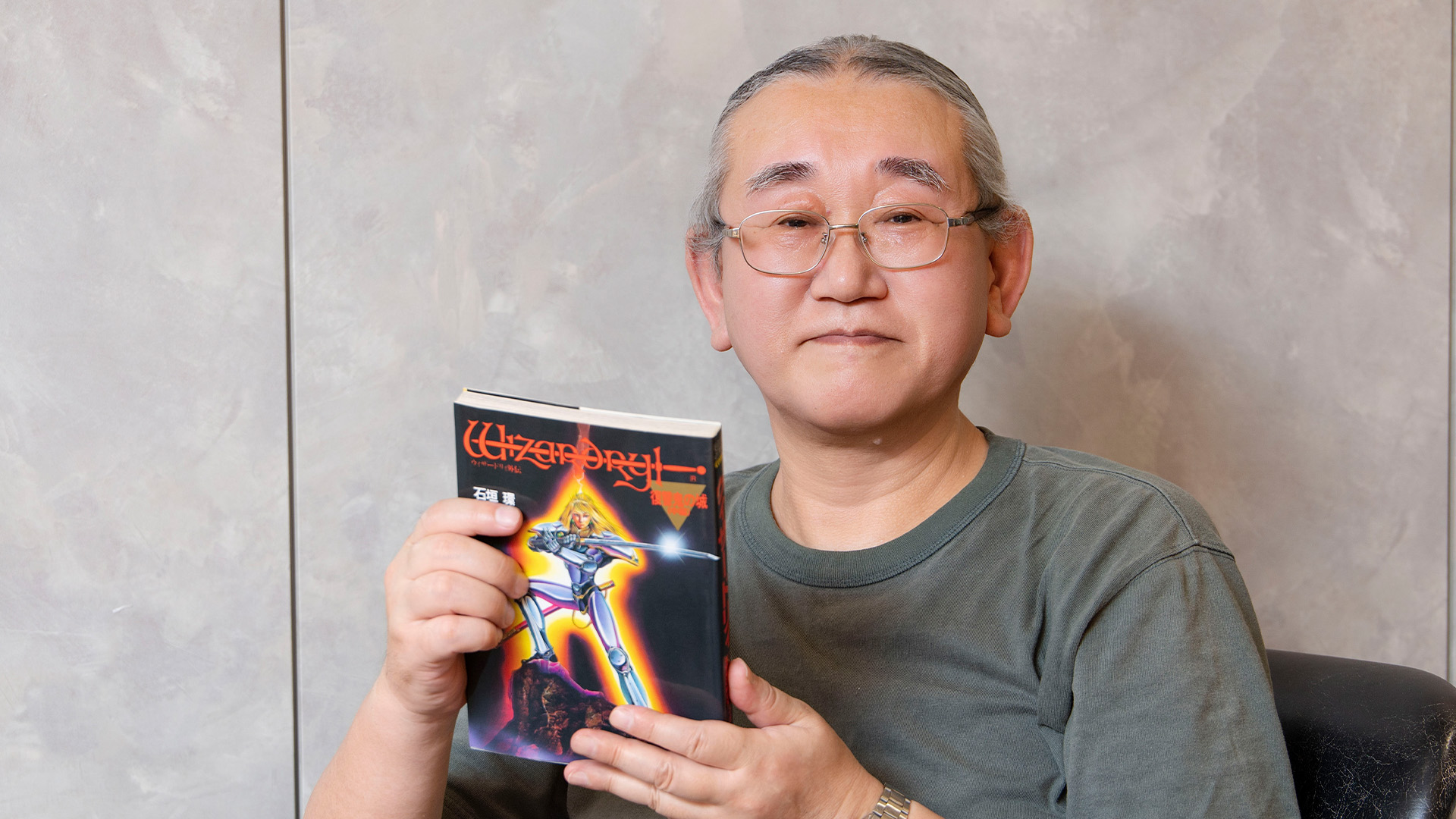
Star Wars. It was a trilogy, and it divided neatly into three parts, so I immediately decided to use it as a foundation. Then I typed up the three-volume plot on a Fujitsu word processor... I used it because I was fast with the "Thumb Shift" keyboard layout. I think it's still saved on one of those floppy disks today, though I haven't bothered to extract the data because it's too much hassle. Anyway, the plot got approved right away, but since we were out of time, I immediately started drawing rough sketches, and I didn't finish until September. July 31st was completely impossible! It might have been August 15th or 20th... Right around that time, my wife went back to her hometown to give birth to our eldest son. She said she'd return around mid-September, and I thought I'd surely be done by then, but I wasn't (laughs). Mr. Inoue would come over in person and take back whatever completed pages I had, repeating that process over and over. When my wife returned, she left our newborn son with her mother—who had come along—and I worked my wife to the bone too just to finally finish it. We had very few assistants. I had to cut a lot from the plot, though. For the first three volumes, I cut more than a third. For the third volume in particular, I could only draw about half of what was planned. At the storyboard stage, I realized it was impossible to fit... The end turned into a digest. Readers, I'm so sorry!
At First, "Llylgamyn" Couldn't Be Used
──By the way, even though it was an adaptation, did rights holders like ASCII—the domestic publisher at the time—do any manuscript checks?
Apparently, none at all. When Mr. Inoue pitched it to me, he said they had permission from SIR-TECH (Editor's Note: Sir-Tech Software, Inc., the US developer of Wizardry), so I could pretty much do whatever I liked. However, there was one restriction: since the original game never explicitly stated whether Trebor was connected to "Llylgamyn" (Editor's Note: The setting for the third game, Wizardry III: Legacy of Llylgamyn), I was asked not to mention the word Llylgamyn in the main story.
──Indeed, Llylgamyn didn't appear in your comics until the Gaiden series. Does that mean the sudden 1,000-year time skip in Gaiden was due to those circumstances?
Yes, because I couldn't use Llylgamyn as the setting. Originally, it was planned for an eight-issue run. A month after finishing the third volume, Mr. Inoue called me in and abruptly said, "I secured a manga slot for you, so it's going to be a serialized run." Doing 24 pages per issue for eight runs would equal exactly one collected tankobon volume. Mr. Inoue asked me, "We could go up to 48 pages, what do you think?" but doing that on a biweekly schedule was completely out of the question! At first, I was thinking of a sea cave labyrinth, but drawing waves and water was too tedious, so I abandoned it and made it an inescapable labyrinth instead. The timeline of Wizardry isn't very clear anyway—like how Trebor's era (Editor's Note: Wizardry: Proving Grounds of the Mad Overlord) and the Knight of Diamonds' era (Editor's Note: Wizardry II: The Knight of Diamonds) strictly align chronologically. So I figured if I jumped 1,000 years, it wouldn't affect the main story, which is why I picked 1,000 years. Though later on, I ended up jumping another 200 years or so (laughs).
──And the rights holders didn't have any issues with that either?
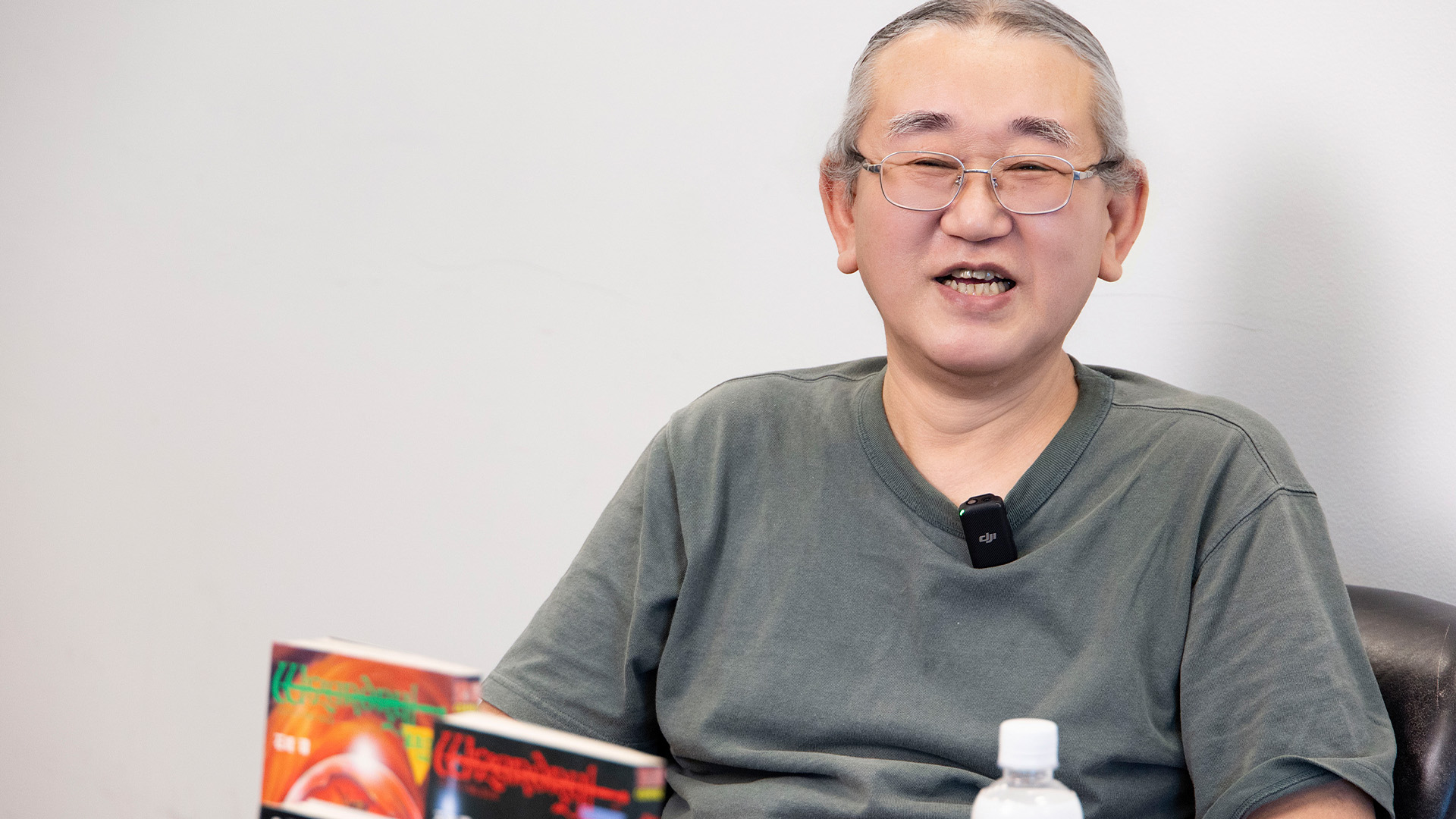
Yeah, they gave it the OK back then too. Then, around the end of the year, I handed in the 8th chapter's manuscript and heard nothing back, so I was just slacking off. Then, around January 5th or 6th—on the first working day of the year—Mr. Inoue called me and asked, "Are the storyboards ready?" I was like, "Wait, what are you talking about?" (laughs). Seriously, there had been zero discussion about a Part Two. Since I had taken so many outrageous liberties, I assumed the series wasn't popular. I was planning to relax for a while, restart work three months later, and pitch something elsewhere, when suddenly he asks if the storyboards are ready! He said, "Well, it's popular, so of course you're writing a continuation!" I had never heard a word about it being popular! (Everyone laughs)
Chronological Reference Timeline
- Nov 1985 Japanese PC version of Wizardry released.
- Mar 1986 Monthly Famicom Hisshoubon first launched (Takarajimasha, JICC).
- Sep 1986 Famicom Hisshoubon becomes a biweekly magazine.
- Dec 1987 Famicom version of Wizardry released.
- Feb 1988 Famicom Hisshoubon Vol. 5 begins serialization of Neighboring Gray and Youth.
- Aug 1988 Naruharu Tanaka publishes Ultima: Terror of Exodus.
- Oct 1988 Tamaki Ishigaki's Wizardry Vol. 1 published.
- Jan 1989 Wizardry Vol. 2 published.
- Jun 1989 Wizardry Vol. 3 published.
- Aug 1989 (?) Wizardry Gaiden serialization begins in the Oct 20 issue.
- Feb 1990 Wizardry Gaiden Part 1: Labyrinth of Gil published.
- Aug 1990 Wizardry Gaiden Part 2: Tower of the Phoenix (Part 1) published.
- Dec 1990 Famicom Hisshoubon rebrands as HiPPON SUPER! and becomes a monthly magazine.
- Feb 1991 Wizardry Gaiden Part 2: Tower of the Phoenix (Part 2) published.
- Oct 1991 Wizardry Gaiden Part 3: Castle of the Avenger (Part 1) published.
- May 1992 Wizardry Gaiden Part 3: Castle of the Avenger (Part 2) published.
- Feb 1993 Wizardry Gaiden Part 3: Castle of the Avenger (Part 3) published.