special interview
Special Interview - Benny Matsuyama (Part 1)
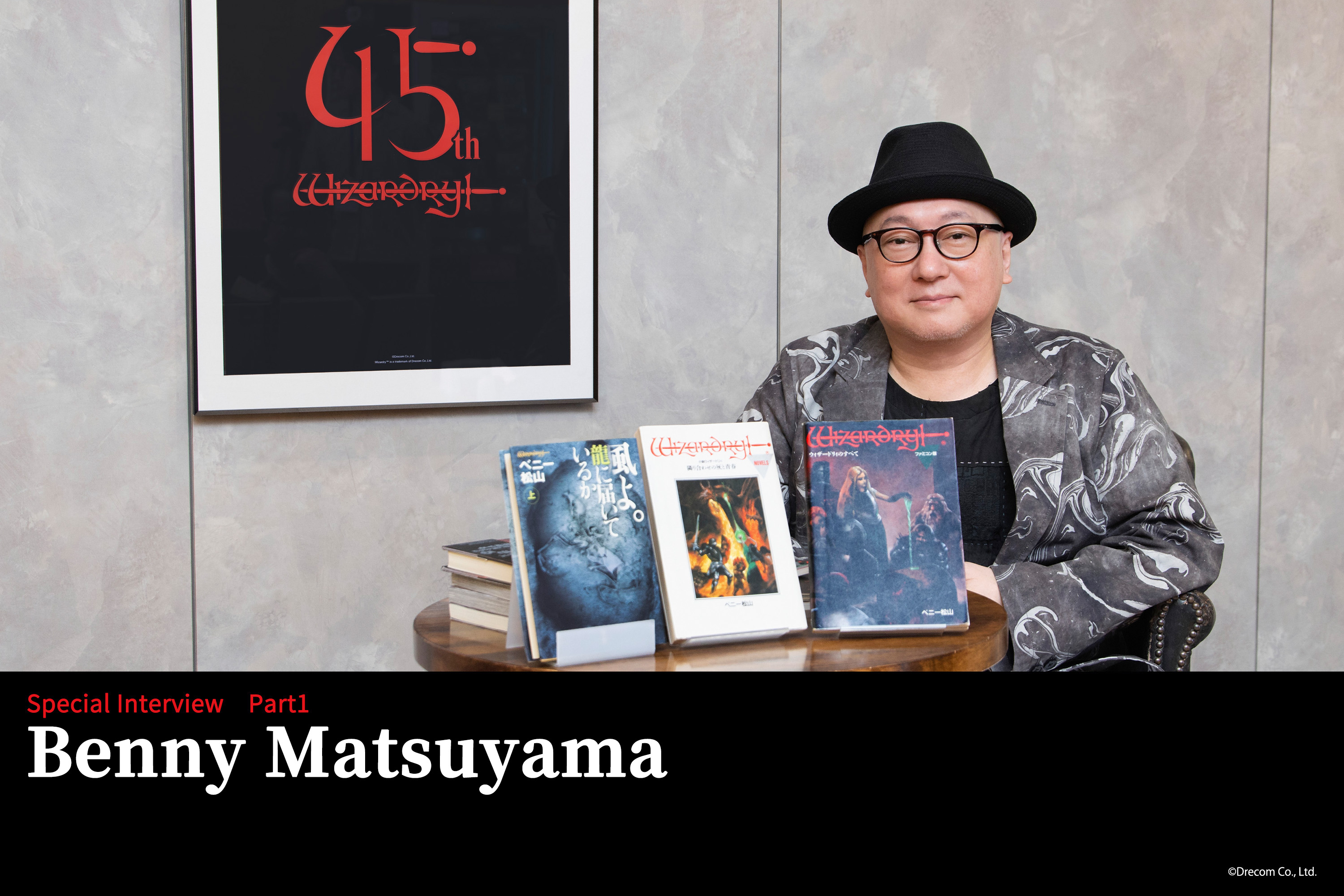
Commemorating the 45th anniversary of the Wizardry series, this dedicated site will feature special collaborative projects with prominent figures who have been involved with Wizardry. In this installment, we spoke with Benny Matsuyama—who not only wrote Wizardry-related articles as a game magazine writer in the 1980s, but also went on to write the novelizations and scenarios for spin-off games, making his mark as a true evangelist for the series' appeal.
──We interviewed you about Wizardry right here two years ago. Looking at everything happening around Wizardry now, how do you feel?
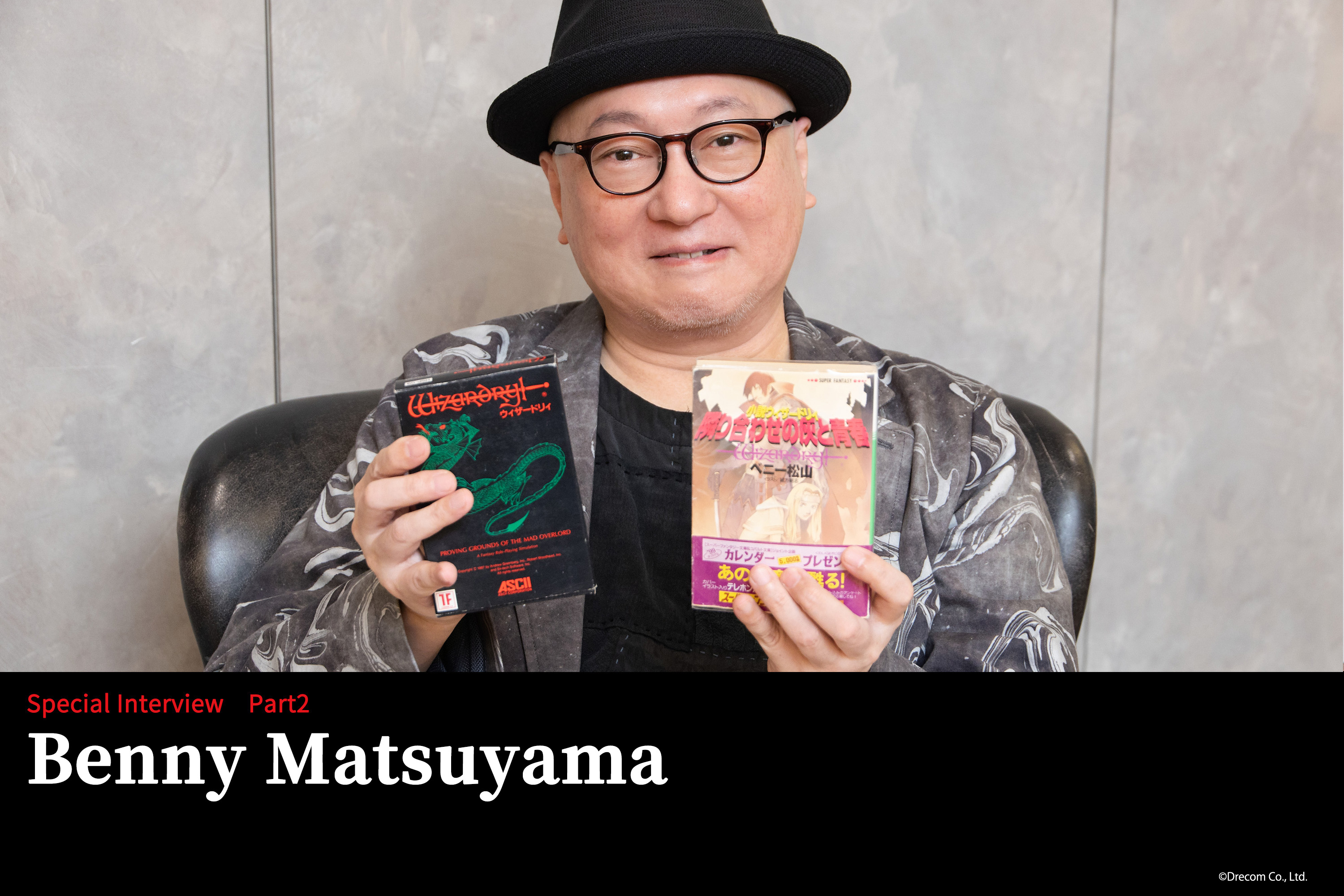
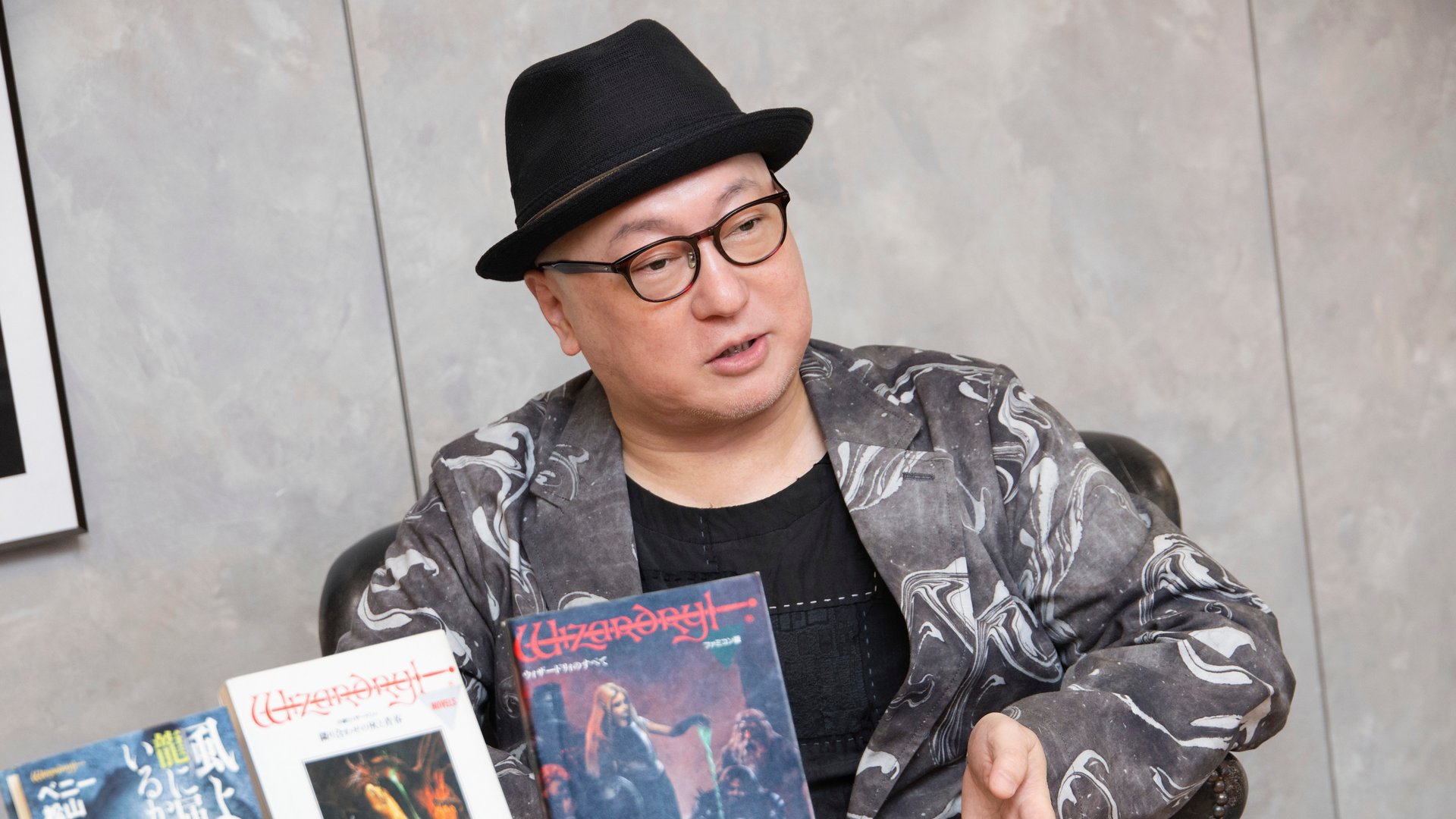
Oh, it's really something. I'm truly glad that people can play the remakes now. Even if you read my novels today (Editor's Note: Wizardry: Neighboring Ashes and Youth and Wizardry II: Wind, Does It Reach the Dragon?), I think there's a lot you won't fully get unless you've played the game they're based on. I wrote them so that they'd become more fun once you understood that.
Hooked on Wizardry in High School
──When did you first encounter Wizardry—or rather, PC games in general?
I think it started when I bought an NEC PC-6001 in junior high. I'd loved arcade games before that, but what was great was that I could play games at home, and if I felt like it, I could even make the games I wanted myself.
──That was right before RPGs (role-playing games) took root in Japan.
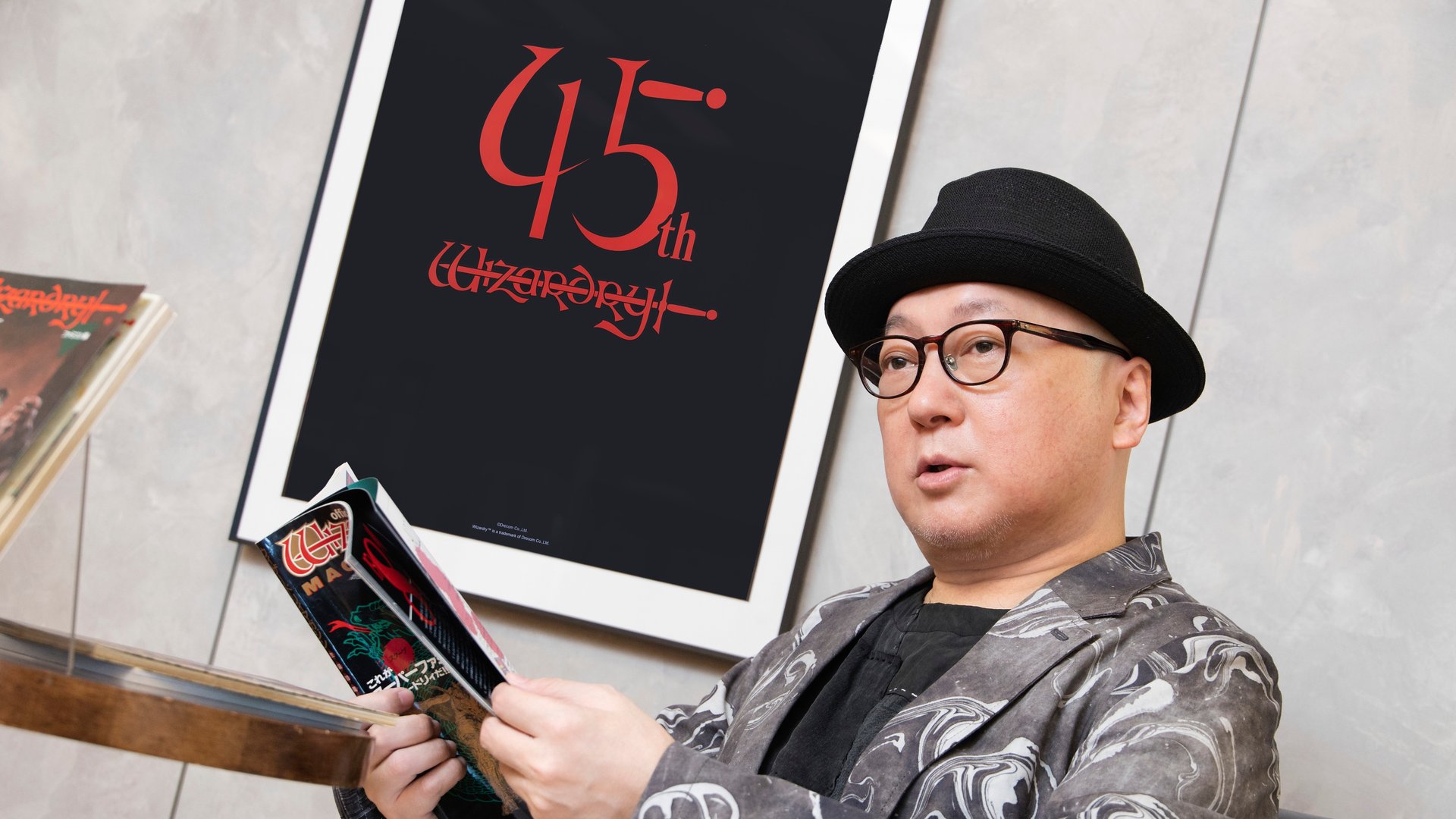
Back then I'd type in programs printed in Kougakusha's magazine I/O and play them a lot. I submitted my own too, and some even got released as commercial software. Then in high school I joined the computer club, figuring there'd be people with all sorts of computers and games. One of the upperclassmen had an Apple IIe (Editor's Note: the third model in the Apple II series, released in January 1983) and Wizardry, which I only knew by title. Magazines often wrote about how there was this thing called an RPG in America, and a game called Wizardry. At the time there weren't many games with an expansive world tied to a story. Most games just ended once you cleared the stage. So when I read in a magazine that there was a whole world spreading out inside a dungeon, I thought, "That sounds amazing." So five or six of us first-years went over to his house to try Wizardry. Since there were six characters, we decided each of us would be in charge of one and took turns at the controls. But a problem came up right away. With that setup, if one person said "I'm running" and chose RUN (Editor's Note: the escape command), the whole party would flee. Except we failed to escape and got wiped out (everyone laughs). Even playing like that, we got all fired up because it was unlike any game we'd played before, and one of my first-year friends said "I'm buying it!" and blew all his New Year's money savings on one. There was a compatible machine called TOPAZ sold in places like Akihabara for about 100,000 yen, and with two disk drives it came to around 200,000 yen. And Wizardry too, of course.
──I have a catalog here from Starcraft, which imported and sold Apple II software back then. It lists Scenario 1 at 10,000 yen, and Scenario 2 at 15,000 yen.
Expensive! His house was close to school, so I basically lived there and got to play. I played at his place all the way up to defeating Werdna. Though afterward, when we just went back to the surface normally and had all our equipment taken away, that was a bit of a shock (laughs).
──Being foreign software, that kind of information wasn't really circulating back then.
Anyway, I got to play up through Scenario 2 at my friend's place.
From Programmer to Writer
──Having a submitted game become a commercial product around 1983—it wouldn't have been strange for you to follow the path of a game programmer like Koichi Nakamura or Kazuro Morita.
At first, my approach to computers did lean toward programming. But around my second year of high school, I realized I hated polishing code. When you hear top programmers talk, they're using all these techniques—do this and you save one byte, do that and the processing gets a little faster. But hearing that, I never felt like trying it myself. I'd think, "Who cares, as long as it runs." So I figured maybe it wasn't for me. But right around then I'd started writing prose and fiction, and I began to feel that I was good at polishing that, and that I enjoyed it.
──What got you started writing fiction?
Another friend in the computer club wrote novels as a hobby and often showed me what he'd written. And I thought, "Oh, this could work, maybe I'll try writing too," so we started showing each other our stuff. The subject was, naturally, swords, sorcery and adventure. Right around then I'd started reading Michael Moorcock (Editor's Note: an SF and fantasy author known for the Elric saga, among others) and similar authors and was finding fantasy really interesting, so I wrote that kind of story.
──So there's a Wizardry novel you wrote back in your amateur days…
There's something Wizardry-ish, yes. A dungeon-crawling story. It's definitely not of a quality I could show anyone. If someone saw it now, I'd die of embarrassment (laughs).
──And that's how you moved toward writing.
Even starting part-time writing work wasn't something I went knocking on doors for. It was around the beginning of my third year of high school. A junior from the computer club told me a software house he knew was looking for someone who could program for the MSX (Editor's Note: a standardized 8-bit computer platform, spearheaded by ASCII and sold by various manufacturers at the time). So I wrote programs there for about a year, but as I mentioned, that was when I was starting to think I wasn't cut out for it. Then there was a younger gamer who also hung around that company, and he was writing for Micom BASIC Magazine. He said he had to start preparing for entrance exams the next year and asked if I'd take over for him, and he took me to Dempa Shimbunsha. That was how it all started.
──And so the writer "TOMMY" (Editor's Note: his pen name during the Micom BASIC Magazine era) was born.
Wizardry Lands in Japan!
──Your first Wizardry-related work was a strategy article in Challenge!! PC AVG & RPG III, a special edition of Micom BASIC Magazine. That covered the ports for Japanese computers sold by ASCII—as a veteran player, what was your first impression of the Japanese version?
I thought, "Ah, they based it on the IBM-PC version." I was playing with my Apple II instincts, and when a POISON GIANT showed up I thought, "MAKANITO (Editor's Note: a mage's suffocation spell, whose targets differ between the Apple II version and later platforms) will take care of this," and cast it—and it didn't work at all, and my party got wiped out. I was stunned. I loved POISON GIANTs. How to put it—I loved them so much it was like hitting the jackpot, an adrenaline rush, so I was really disappointed.
──I see—you lost your moment of catharsis.
I wonder why they changed it. Or rather, maybe it was the Apple II version's behavior that differed from the original spec. So I was happy that the remake went back to the old behavior.
Memorable Monsters and Items
──By then, the Wizardry series was already up to around its fifth title.
In college I had a chance to borrow an Apple IIc (Editor's Note: a compact model released in 1984), and I played through them on that.
──We'd love to hear about your favorite titles and monsters from the original series, and memories from playing.
By far my favorite is Scenario 1, which I think has a miraculous balance. The Apple II version, too—including the part where POISON GIANTs die to MAKANITO. And then there's the despair of the GREATER DEMON. That was incredible. It felt so strong I thought it had to be some kind of mistake. Once you get the Blade Cusinart, you start winning very consistently, right? Just when you're getting cocky, out comes this GREATER DEMON that looks like a line-drawn bull. You attack thinking, "I can probably win this," and you can't lay a finger on it. Also, the Apple II version allowed spell attacks during a surprise attack. So you'd think "The enemy surprised us!" and then get hit with five MADALTOs in a row and get wiped out—there were accidents like that too.
──Neighboring Ashes and Youth also begins with someone being killed by a GREATER DEMON.
That made quite an impact. And this is also reflected in the novel, but if we're talking memorable items, it's got to be the Muramasa. Once you get it, the whole story changes. That part, too, felt like writing about my own experience. Memorable experiences don't come when things are stable. Looking back, the times you're facing a total wipe are the most fun. Being in tatters and just wanting to somehow make it back to town. When all's said and done, that kind of thing is what everyone enjoys. But those memories are mostly from Scenario 1—by Scenario 2 the characters are ridiculously strong, so those clear-cut crises rarely happen. So the fun shifted to things like how to solve the in-game gimmicks, or how to deal with unfamiliar monsters.
──In Neighboring Ashes and Youth, the depiction of the FLACK was also very striking.
That's entirely based on Jun Suemi's wonderful design for the Famicom version. A clown-like figure you might meet in a nightmare. The FLACK is a monster whose origins are kind of a mystery, isn't it? In the Apple II version it looks like a slime-type monster.
──It seemed to be inspired by the illustration in Wizardry Monsters Manual published by ASCII. A small, buck-toothed man who faintly reminds you of a certain celebrity.
Why they made it look like that is a mystery, huh.
Evangelist of Wizardry
──How did you come to work under a different name for Famicom Hisshoubon at JICC Publishing (Editor's Note: now Takarajimasha)?
There was a writer who worked for both Micom BASIC Magazine and Famicom Hisshoubon, and one day he invited me: "You can do more than this, can't you? I'll introduce you to Famicom Hisshoubon, just keep it secret from BeMaga… got it?" I think that was sometime in 1987. The magazine had just switched to biweekly and needed more hands.
──Mr. (Tamaki) Ishigaki, who did the Wizardry comic adaptation, also said he was invited because they were so short-handed.
My first job was the Famicom game Pro Golfer Saru, and they asked me, "What'll your pen name be?" so I came up with one on the spot. There's a character in that game called Benibachi, so I went with "Benny," and added "Matsuyama" because it had a nice ring to it.
──So if your first assignment had been a different game, you'd have a different pen name.
That's right. Back then I figured I wouldn't be using it for all that long… and I ended up using it for 40 years.
Reference Timeline
- Oct 1976 I/O launched. (Kougakusha)
- Nov 1981 NEC PC-6001 released.
- Jun 1982 Micom BASIC Magazine launched. (Dempa Shimbunsha)
- Apr 1984 Apple IIc released in Japan and the US around the same time.
- Nov 1985 Japanese PC version of Wizardry goes on sale.
- Mar 1986 Monthly Famicom Hisshoubon launched. (Takarajimasha, JICC)
- Sep 1986 Famicom Hisshoubon goes biweekly.
- Oct 1987 Challenge PC AVG & RPG III (Dempa Shimbunsha)
- Dec 1987 Famicom version of Wizardry released.
- Feb 1988 Serialization of Neighboring Ashes and Youth begins in Famicom Hisshoubon Vol. 5.
- Oct 1988 Tamaki Ishigaki's Wizardry Vol. 1 released.
- Nov 1988 Novel Wizardry: Neighboring Ashes and Youth released.
- Aug 1989 Wizardry no Subete (All About Wizardry) released.
Benny Matsuyama
A writer with Studio Bent Stuff. Since his college days, he has worked on magazine articles and strategy guides for publications such as Micom BASIC Magazine (Dempa Shimbunsha, under the name TOMMY) and Famicom Hisshoubon (JICC Publishing), writing a great many Wizardry-related articles in particular and helping grow its fan base. His novel Neighboring Ashes and Youth, serialized in Famicom Hisshoubon, and its sequel Wind, Does It Reach the Dragon? are highly regarded as classics of game novelization, and since Wizardry Gaiden II: Curse of the Ancient Emperor he has also been active as a scenario writer.
Interview & Text: Ryo Morise