special interview
Special Interview - Benny Matsuyama (Part 2)
Famicom Hisshoubon's Wizardry Push
──Within that same year, you'd become something like the magazine's resident Wizardry guy…
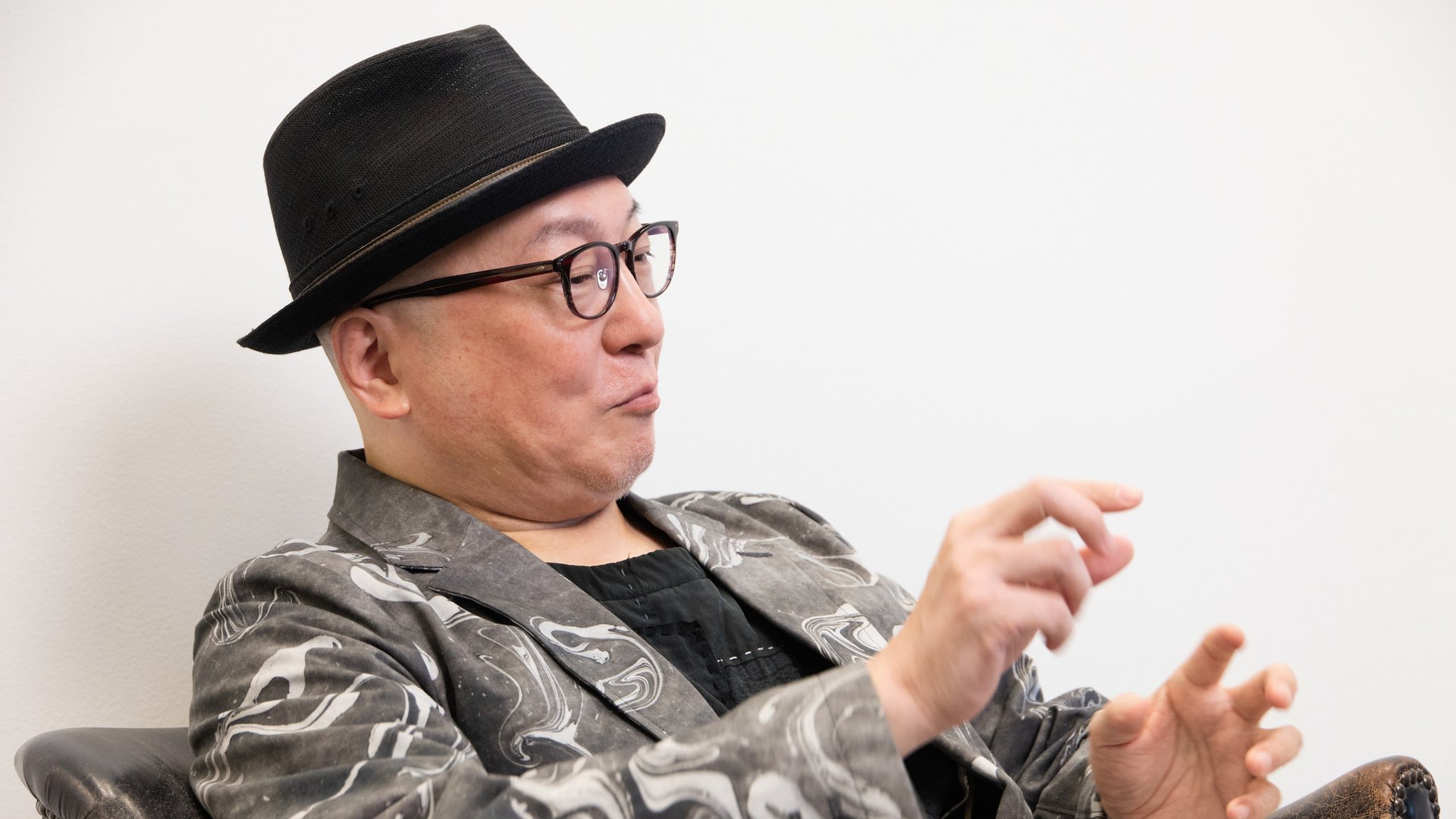
That was a case of me pretty much forcing my way into the job. I think it was around summer—ASCII sent over an in-development test ROM, bare circuit board and all, that only let you go down to the fourth floor. I thought, "Well, let me play it for a bit. Down to the fourth floor, that'll take a few hours at most…" and holed up in the photo room with that casual attitude. By the time I came out my face had changed, and I said, "Please let me handle this game. I understand all of it." (everyone laughs)
──Among game magazines, Hisshoubon stood out for how hard it pushed Wizardry.
The editor who later also handled my novel was deeply captivated by Wizardry's more adult atmosphere, so things moved toward us building the pages together. The "Wizardry Fan Club" corner was mostly his doing.
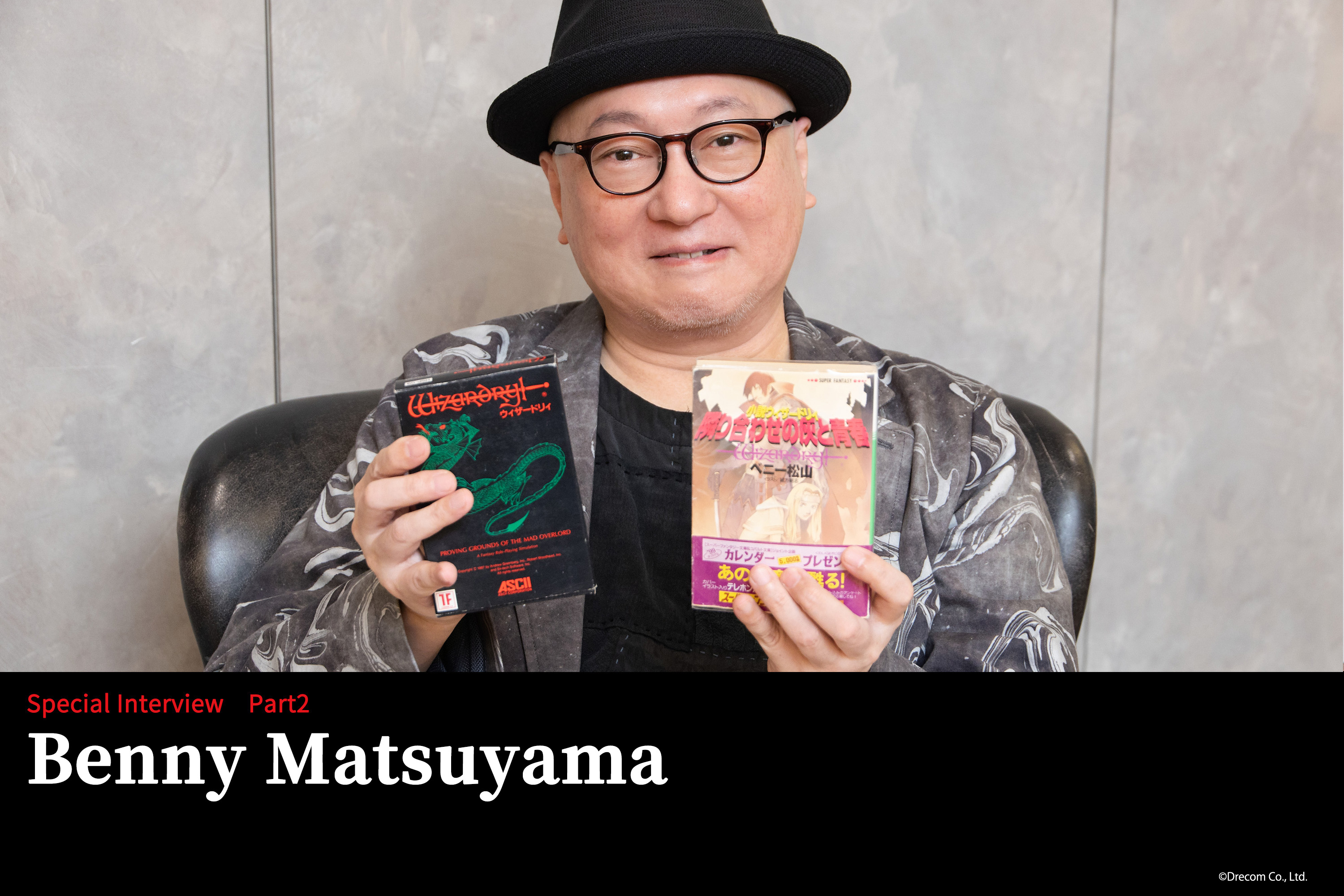
──Neighboring Ashes and Youth began serialization in 1988. A serialized novelization in a game magazine was a pretty unusual attempt at the time.
At first I meant to do "relatable moments." A party that thinks it's strong gets trounced by a GREATER DEMON and comes back. "So what do we do to win?" "Isn't it a Samurai?"—that's the protagonist's thinking. Back then I myself felt like the only way was to make a Samurai character and get the Muramasa. Other things too, like how to get evil and good characters into the same party you have to have them meet up after entering the dungeon. The plan was to do things like that, move the story along briskly like a digest over five installments, get the Muramasa partway through, get revenge on the GREATER DEMON and come back. But I got on a roll, and by the third installment they still hadn't entered the dungeon (everyone laughs). Still, partly because they made it a very visual layout with Mr. Suemi's illustrations sprinkled throughout, the reader response was really good. So the editors said, "Don't stop at five, keep going," and around then I sorted out the plot and rebuilt it into a proper story. That's where the evil party sprang up—until then there wasn't a trace of it (laughs).
Delving into the World
──Alongside the articles and novel, you also produced setting books like Wizardry no Subete (All About Wizardry). That must have been hard, given how little reference material on Western fantasy there was compared to today.
ASCII had put out guide books too, but I didn't really intend to pull from those. If anything, I thought it'd be nice to expand it in a direction like The Lord of the Rings. There were knowledgeable people around me, like Ichiro Tezuka, who I still work with at Bent Stuff, and we had a fair collection of books, so that environment helped me a lot. Even so, for things we didn't know, I filled the gaps with imagination—"it would work if it were like this"—and that's how I wrote All About Wizardry.
──I think one of your major contributions to the series going forward was establishing the Japanese names for the spells. When did you come up with those?
While writing the novel. With Wizardry spells, you can't intuitively tell what effect they have, right? When we decided to make All About Wizardry, I decided to create a spell list page to make it user-friendly. At that point I reorganized them by the type of effect—single-target attack, group attack and so on. Then while writing the novel, I gave them Japanese names, keeping that list in mind to some extent. The inspiration was probably Dragon Quest. If you hear Mera, Gira, Hyado, you can roughly tell what kind of spell it is. Also, I think there was the idea that putting katakana ruby over kanji looks cool. I think that came from translated novels. Even if not, say you write "嵐を呼ぶ剣" (The Tempest Sword) and put the ruby "Stormbringer" over it—that's cool, right? (Editor's Note: Stormbringer is the demon sword that appears in the Elric saga and other Moorcock works. In the Japanese translation of that series, the ruby "rune blade" is placed over the word for "demon sword.")
Involvement with the Comic Adaptation
──And so Famicom Hisshoubon and its successor magazines became the center of the Wizardry culture that spread with the Famicom version.
Back then Hisshoubon was about the only one treating Wizardry as a big deal, and we put a lot of effort in, wanting to widen our lead even further.
──It wasn't until the '90s that the publisher ASCII started putting out Wizardry comics of its own. You were credited as a collaborator on Tamaki Ishigaki's comic adaptation as well—how did you feel when you first heard about the project?
I thought it was great that more things like that were coming out for Wizardry. At first, the editors approached me about handling the original story. But when I saw Mr. Ishigaki's storyboards, the story was already fully formed. So we agreed that I'd just offer a little help.
──Mr. Ishigaki told us that when starting Gaiden, he wanted to keep the party small, so he asked for advice on the minimum number of characters needed to clear Wizardry. And that you told him, "You can clear it with at least four elite-class characters."
I'd forgotten until today, but yes, there was something like that. It's true that when structuring a story, six people can be a bit much to handle. With three excellent spell users… if I answered four elite classes, I think that was based on my actual play experience. A Ninja can disarm traps, a Samurai and a Lord give you plenty of attack power… with the Muramasa you can handle tough enemies, and the Lord can help with healing. And with a Bishop in the back for identifying items, you'd have enough spells—maybe that's what I meant.
──Is there a scene in the comic that you like?
What struck me as really impactful was in the first series, when the monsters appeared on the surface. The MAELIFIC looked seriously menacing. I thought the visuals were fantastic.
About WIZ91
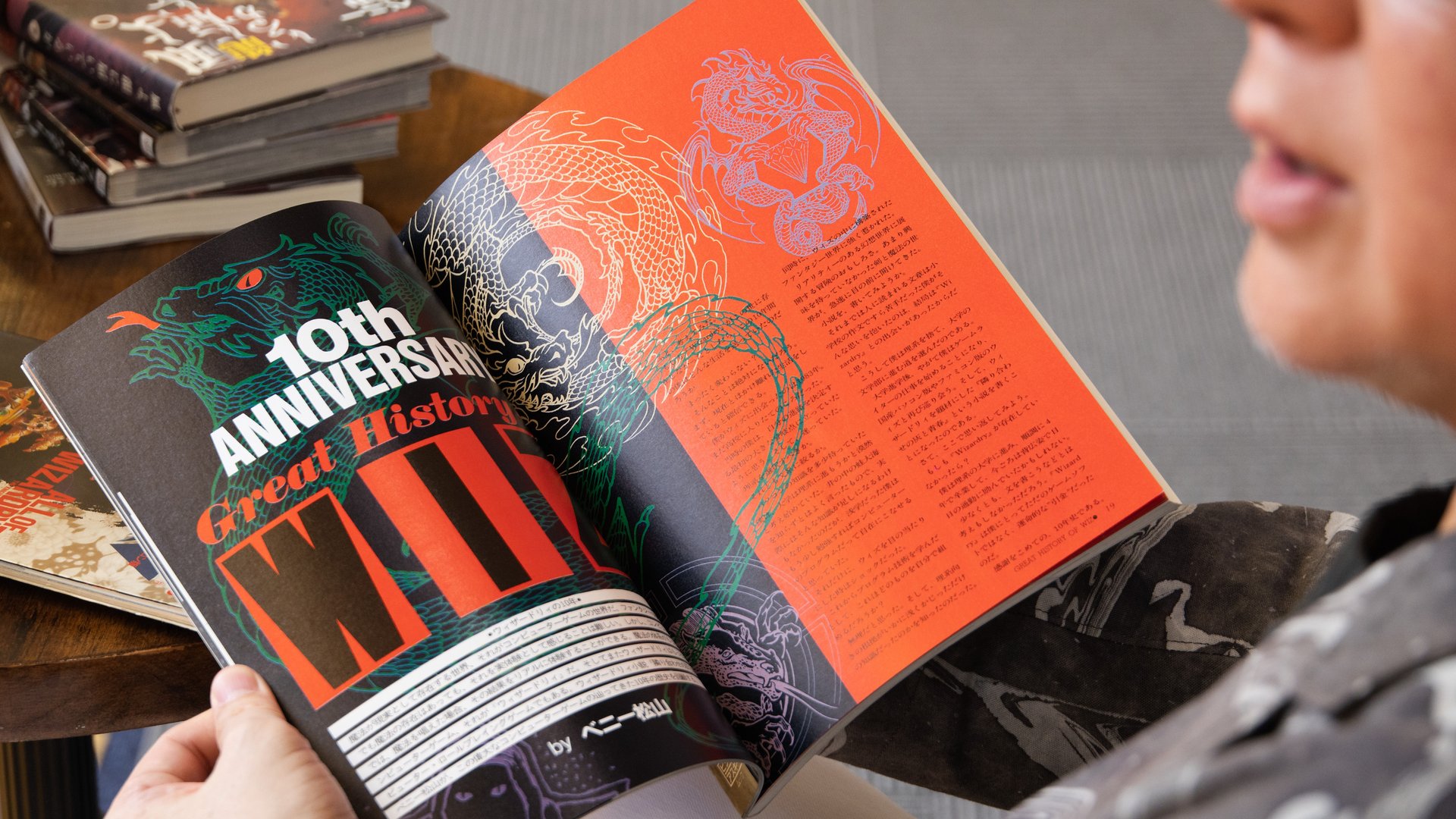
──Entering the '90s, ASCII started running Wizardry comics in Monthly ASCII Comic, and you wrote the scenario for the Game Boy title Wizardry Gaiden II: Curse of the Ancient Emperor, and the original story for its spin-off comic, Yomi no Haou. Before all that, I hear you were heavily involved in the event ASCII held at Kudan Kaikan (Editor's Note: a former venue in Kudanshita that was used for a wide range of events) on January 5, 1991, to celebrate Wizardry's 10th anniversary.
WIZ91. That takes me back.
──There's very little testimony online from people who attended that event, so for those of us who didn't go, it's shrouded in mystery.
Someone from ASCII's advertising department contacted me directly. It was the 10th anniversary, so they wanted to hold an event. Rent Kudan Kaikan, gather an audience of a thousand or so, and as the highlight they wanted to try something like a stage play—what did I think? I said, "Sure, but I've never written a play script." Right around then, there was someone at ASCII who'd done theater in college and knew a person who could write and direct plays. The person they introduced was Hideo Furukawa (Editor's Note: He debuted as an author with Wizardry Gaiden II: Suna no Ou, and won the 55th Mystery Writers of Japan Award and the 23rd Nihon SF Taisho Award for Arabia no Yoru no Shuzoku, which features that unfinished work as a story within the story). So it ended up with me creating the original concept, and Mr. Furukawa turning it into a play.
──Do any of the scripts from back then still exist?
I've moved so many times that I don't think any paper copies survive. I think it cost quite a lot. We built a GREATER DEMON statue about two meters tall, and at the very end it came crashing out and the party went "Aaah!"—that was the staging. We held proper auditions for the actors, and brought in someone to coach the action… those people also played the enemy ninjas. There were some interesting people among the cast, too. Like Yuji Ueda, who was still a budding voice actor at the time. And actress Megumi Nishimuta, who later had a regular role in Kamen Rider Kabuto, played a female ninja.
──How was the event itself structured?
The play was the highlight and the opening act, followed by things like a talk show and a mini-concert by a string quartet. There was also a dungeon rakugo by Master Enjo (Editor's Note: rakugo storyteller Sanyutei Enjo (the first, deceased). An avid gamer, he wrote columns for multiple PC magazines and was also involved in game design). They also announced the Game Boy Wizardry Gaiden and the Super Famicom Wizardry V, both in development at the time. And for the ending, Hiroko Kasahara herself sang live "Distance," the theme song of the OVA released that same year.
──How many people attended?
We invited 1,500 people for free from among the applicants, with two shows starting at 12:00 and 15:30. Including invited industry guests, I think it was around 2,000 in total. It was a fairly large-scale event. So we spent a lot of time rehearsing the play, too. At first we rented a studio somewhere, but as it came together we needed a bigger space… Near Kurokawa Station on the Odakyu Line there was something called Micom City, promoted by Kawasaki City to attract what we'd now call IT companies. There was an ASCII building there with a huge space inside, so we'd go there to rehearse.
──What was the play about?
It was a regular dungeon adventure story, but midway through, Pin Suda—who handled Wizardry PR in ASCII's advertising department—and I appeared as beings on a slightly higher layer and asked the audience something like, "Everyone, how do you like the story so far? Which will you choose?" Based on the volume of applause, we'd say, "Looks like you've chosen this one," and branch the scenario. We made two points like that. That said, the story didn't change completely—it would branch once and then come back to the main plot.
──With only two shows, there must have been scenes you rehearsed but never got to show.
For that, those of us asking the questions got a little clever. We knew the option asked about second would definitely get bigger applause, so we switched the order of the questions between the first and second shows and steered the audience toward the ones we wanted to show (laughs).
Connecting to "I'm Glad I Did It"
──The Japanese spell names and such have been carried over in later related works. How do you feel, having watched that happen?
I don't really think about things like "this is my influence." For me, the things I've seen and experienced, including Wizardry, are at the core when I create something. If I've been able to have an influence, I'd like it to connect onward in a good cycle—that's how I see it.
──Robert also said that his own Wizardry is one link in a long, continuing chain of culture.
Exactly that. Playing games, reading books—I'd love for all of it to connect nicely to a future "I'm glad I did it."

On the 45th Anniversary
──Finally, please share a message about Wizardry's 45th anniversary, for the works and for the fans.
When I wrote the novel, the first thing on my mind was, "Everyone feels this way too, right?" And I was writing it thinking that everyone must be itching to write something like this novel too. People connected with that, and some kept reading it for years afterward. I believe the people who found Wizardry fun back then must surely still love Wizardry now, 45 years later. Drecom is putting out projects that live up to that, and I'd like to enjoy them together again. And then, coming full circle, maybe something will come from me again, too.
──Thank you for sharing such fascinating stories today.
Reference Timeline
- Oct 1976 I/O launched. (Kougakusha)
- Nov 1981 NEC PC-6001 released.
- Jun 1982 Micom BASIC Magazine launched. (Dempa Shimbunsha)
- Apr 1984 Apple IIc released in Japan and the US around the same time.
- Nov 1985 Japanese PC version of Wizardry goes on sale.
- Mar 1986 Monthly Famicom Hisshoubon launched. (Takarajimasha, JICC)
- Sep 1986 Famicom Hisshoubon goes biweekly.
- Oct 1987 Challenge PC AVG & RPG III (Dempa Shimbunsha)
- Dec 1987 Famicom version of Wizardry released.
- Feb 1988 Serialization of Neighboring Ashes and Youth begins in Famicom Hisshoubon Vol. 5.
- Oct 1988 Tamaki Ishigaki's Wizardry Vol. 1 released.
- Nov 1988 Novel Wizardry: Neighboring Ashes and Youth released.
- Aug 1989 Wizardry no Subete (All About Wizardry) released.
Benny Matsuyama
A writer with Studio Bent Stuff. Since his college days, he has worked on magazine articles and strategy guides for publications such as Micom BASIC Magazine (Dempa Shimbunsha, under the name TOMMY) and Famicom Hisshoubon (JICC Publishing), writing a great many Wizardry-related articles in particular and helping grow its fan base. His novel Neighboring Ashes and Youth, serialized in Famicom Hisshoubon, and its sequel Wind, Does It Reach the Dragon? are highly regarded as classics of game novelization, and since Wizardry Gaiden II: Curse of the Ancient Emperor he has also been active as a scenario writer.
Interview & Text: Ryo Morise